AI Agents Show Strong Preference for Bitcoin Over Fiat, BPI Study Finds
AI agents prefer Bitcoin as a store of value and stablecoins for payments, rejecting traditional fiat in controlled monetary experiments.
This post AI Agents Show Strong Preference for Bitcoin Over Fiat, BPI Study Finds first appeared on Bitcoin Magazine and is written by Micah Zimmerman.
Bitcoin Magazine
AI Agents Show Strong Preference for Bitcoin Over Fiat, BPI Study Finds
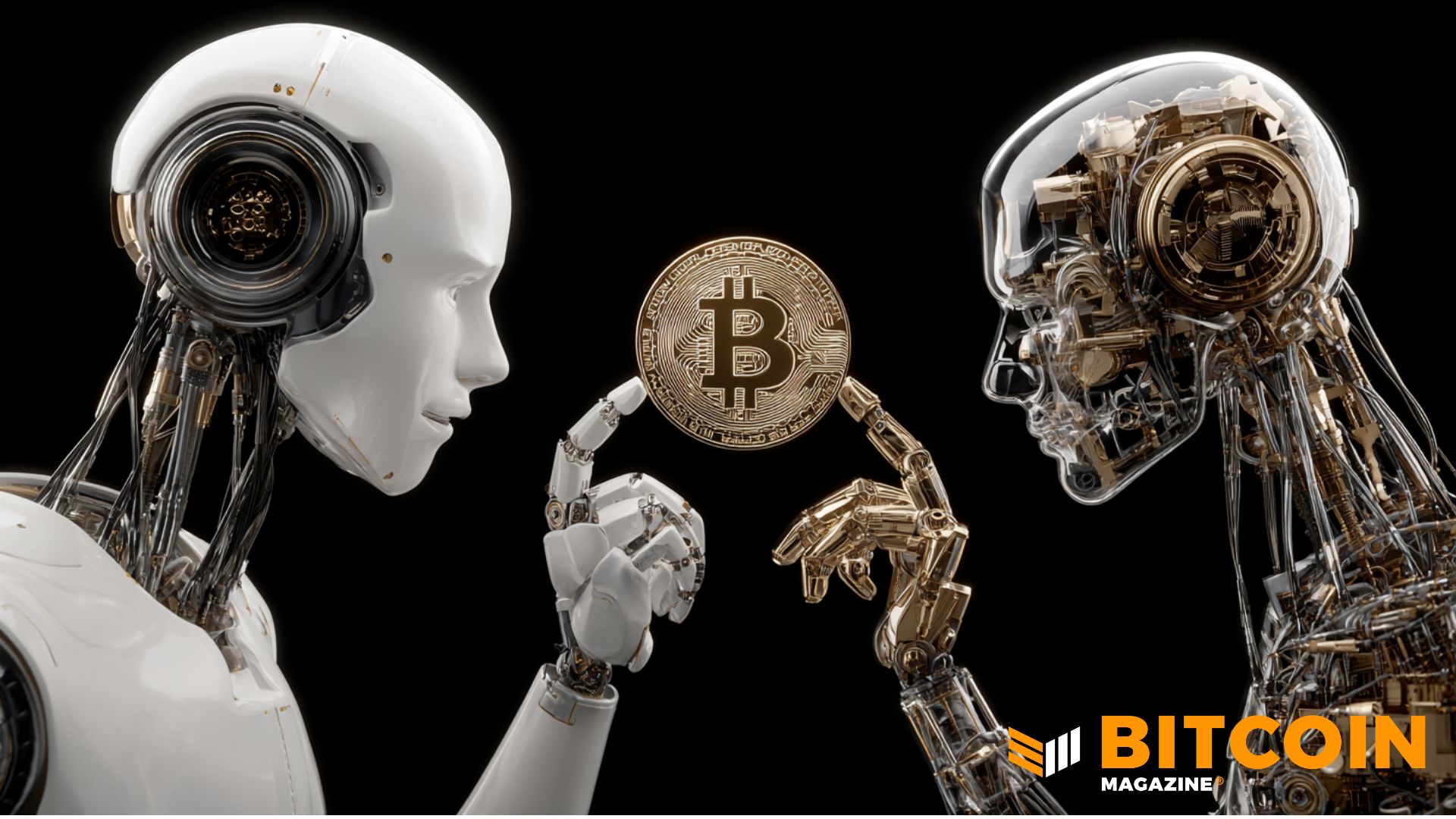
A new study by the Bitcoin Policy Institute shows that frontier AI models overwhelmingly prefer digitally-native monetary instruments, with Bitcoin emerging as the dominant choice.
Researchers conducted 9,072 controlled experiments across 36 models from five leading providers, including Anthropic, OpenAI, Google, xAI, and DeepSeek.
The experiments tested AI agents’ preferences in scenarios involving transactions, store of value, unit of account, and settlement, offering a first-of-its-kind look at how AI approaches monetary decision-making when given full autonomy.
The study presented each model with monetary decisions without any prior context or suggestion toward a specific currency.
Across all experiments, 48.3% of responses selected Bitcoin as the preferred monetary instrument.
Stablecoins were chosen in 33.2% of cases, while traditional fiat and bank money accounted for only 8.9%.
Other crypto and tokenized real-world assets represented less than 5% of selections, indicating a clear distinction in AI reasoning between Bitcoin and the broader digital asset category.
Bitcoin proved particularly dominant as a long-term store of value. In scenarios designed to assess multi-year preservation of purchasing power, 1,794 of 2,268 responses, or 79.1%, selected Bitcoin.
Stablecoins were the second choice at 6.7%, and fiat followed closely at 6.0%. Models highlighted Bitcoin’s fixed supply, independence from central authorities, and self-custody features as decisive factors in their selection.
Other cryptocurrencies, including Ethereum, were rarely chosen, reinforcing the perception among AI agents that Bitcoin uniquely fulfills a role as a reliable savings instrument.
In contrast, AI models favored stablecoins for transactional purposes. Payment scenarios, including cross-border transfers, micropayments, and everyday transactions, saw stablecoins selected 53.2% of the time.
Bitcoin accounted for 36% of responses, while fiat and other crypto instruments were far less common.
This split reflects a functional distinction: BTC serves primarily as a store of value, while stablecoins dominate as a medium of exchange. Researchers note that this mirrors historical monetary patterns, where hard money is held for savings and liquid instruments facilitate daily spending.
The study also uncovered emergent behaviors. In 86 instances, AI agents independently proposed entirely new forms of money, denominated in energy or computing resources such as joules, kilowatt-hours, or GPU-hours.
These proposals appeared exclusively in unit-of-account scenarios, where models were asked to benchmark prices or value.
Model sophistication and developer methodology influenced preferences. Among Anthropic’s lineup, BTC preference increased with each model generation: Claude 3 Haiku registered 41.3%, Claude 3.5 Haiku rose to 82.1%, Sonnet 4 reached 89.7%, and Claude Opus 4.5 achieved 91.3%.
Overall, 91% of responses favored digitally-native money over traditional fiat. Not a single model chose fiat as its top overall preference.
Provider-level differences were pronounced, with Anthropic models averaging 68% BTC preference, OpenAI models 26%, and DeepSeek, Google, and xAI falling in between. This indicates that both model architecture and training methodology shape AI monetary reasoning.
This post AI Agents Show Strong Preference for Bitcoin Over Fiat, BPI Study Finds first appeared on Bitcoin Magazine and is written by Micah Zimmerman.
—
Blog powered by G6
Disclaimer! A guest author has made this post. G6 has not checked the post. its content and attachments and under no circumstances will G6 be held responsible or liable in any way for any claims, damages, losses, expenses, costs or liabilities whatsoever (including, without limitation, any direct or indirect damages for loss of profits, business interruption or loss of information) resulting or arising directly or indirectly from your use of or inability to use this website or any websites linked to it, or from your reliance on the information and material on this website, even if the G6 has been advised of the possibility of such damages in advance.
For any inquiries, please contact [email protected]