Kevin Warsh is set to become the next Federal Reserve chairman on May 15.
He views the use of the Fed balance sheet as “unhelpful” in achieving the Fed’s dual mandate.
Unwinding it, however, comes with significant risks for investors.
Kevin Warsh is expected to become the next Federal Reserve chairman after getting an OK from the Senate Banking Committee. Assuming the full Senate confirms his nomination, he will succeed Jerome Powell (who has held the position since 2018) by May 15.
Powell, however, has said he isn’t leaving the Federal Open Market Committee, which oversees the Fed’s monetary policy decisions. He plans to stay on as a governor and could present a stark contrast to the incoming chairman.
Will AI create the world’s first trillionaire? Our team just released a report on the one little-known company, called an “Indispensable Monopoly” providing the critical technology Nvidia and Intel both need. Continue »
Kevin Warsh disagrees with one key policy Powell has supported that has been used to influence interest rates without directly changing the fed funds target rate. And reversing course on this policy could have a major impact on financial markets.
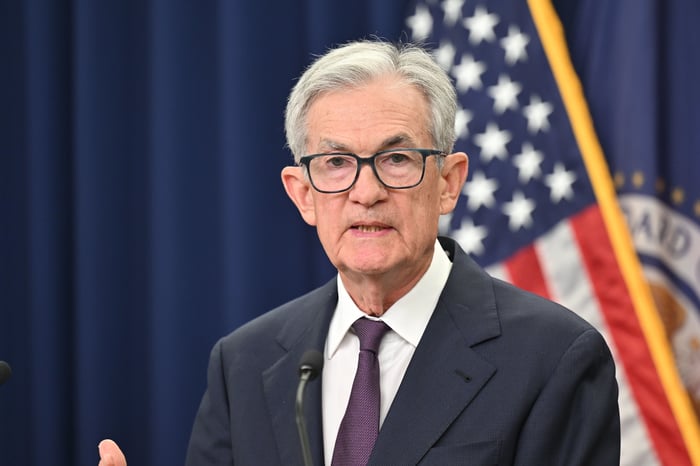
Image source: Federal Reserve.
Warsh sees the Federal Reserve as having two main tools to fulfill its dual mandate of full employment and stable pricing. The first tool gets a lot of headlines: interest rates. The Fed is in charge of setting the target overnight borrowing costs for banks, the fed funds rate.
The second tool, holding a balance sheet of bonds and reserves, is where Warsh holds a very different stance than Powell and his recent predecessors. “The Fed balance sheet has played a particularly, I think, unhelpful role in helping the Fed achieve its dual mandate,” Warsh said in his confirmation hearing. While Powell’s Fed has used the balance sheet to buy long-term government bonds and mortgage-backed securities to tighten long-term interest rates, Warsh thinks that’s a mistake.
Warsh would prefer to reduce the assets on the Fed’s balance sheet, which would have a notable impact on the markets. The Federal Reserve currently holds over $6 trillion in securities on its balance sheet. A massive seller in the market would put pressure on bond prices, thus increasing the effective interest rate. The FOMC could offset that increase by lowering the target fed funds rate, something President Trump has been pressuring Powell to do since the start of his second term.
Reducing the balance sheet without disrupting markets is a tough task, though. When the Fed sold off assets in 2019, short-term interest rates spiked along with long-term interest rates. In the most recent campaign to reduce the balance sheet, launched in 2022, the same thing happened, prompting a reversal of course starting in December.
Warsh has acknowledged that it will take a long time to unwind the balance sheet. Even if done with the utmost caution, the impact on investors will be noticeable, and not just bond investors.
Warren Buffett once made the analogy that interest rates are like gravity to asset prices. Higher interest rates mean lower asset prices. That’s because every other asset is first compared to the risk-free rate investors could receive from buying Treasury bonds.
If long-term interest rates increase, investors will place a greater discount on companies’ future earnings and cash flows. That could hit growth stocks particularly hard, as they’re expected to produce significantly more earnings and cash flow well out in the future.
If those earnings are discounted at a higher rate, they’re worth less today. As a result, the S&P 500 and Nasdaq Composite could see a drop in value.
Beyond valuations, though, borrowing costs will rise for many consumers and for some companies issuing longer-dated debt. That could slow consumer spending and reduce earnings growth for many companies.
If higher long-term rates enable the Fed to cut the target fed funds rate, it could mitigate some of the pressure. Importantly for investors, lower short-term borrowing rates and a steepening yield curve (where the gap between short-term and long-term rates widens) would favor slower-growing value stocks.
Investors should position their portfolio to prepare for a new Fed under Warsh’s leadership. While he will face some opposition, including the likelihood of butting heads with Powell, he’ll hold tremendous influence over the future of the central banks’ policies, and it could have a big impact on your portfolio.
When our analyst team has a stock tip, it can pay to listen. After all, Stock Advisor’s total average return is 968%* — a market-crushing outperformance compared to 202% for the S&P 500.
They just revealed what they believe are the 10 best stocks for investors to buy right now, available when you join Stock Advisor.
*Stock Advisor returns as of May 2, 2026.
Adam Levy has no position in any of the stocks mentioned. The Motley Fool has no position in any of the stocks mentioned. The Motley Fool has a disclosure policy.
—
Blog powered by G6
Disclaimer! A guest author has made this post. G6 has not checked the post. its content and attachments and under no circumstances will G6 be held responsible or liable in any way for any claims, damages, losses, expenses, costs or liabilities whatsoever (including, without limitation, any direct or indirect damages for loss of profits, business interruption or loss of information) resulting or arising directly or indirectly from your use of or inability to use this website or any websites linked to it, or from your reliance on the information and material on this website, even if the G6 has been advised of the possibility of such damages in advance.
For any inquiries, please contact [email protected]