Paraguay Exploring Using Seized Miners for State-Run Bitcoin Operation
Paraguay’s state utility is teaming up with Morphware to turn seized miners into the country’s first government-run Bitcoin operation.
This post Paraguay Exploring Using Seized Miners for State-Run Bitcoin Operation first appeared on Bitcoin Magazine and is written by Micah Zimmerman.
Bitcoin Magazine
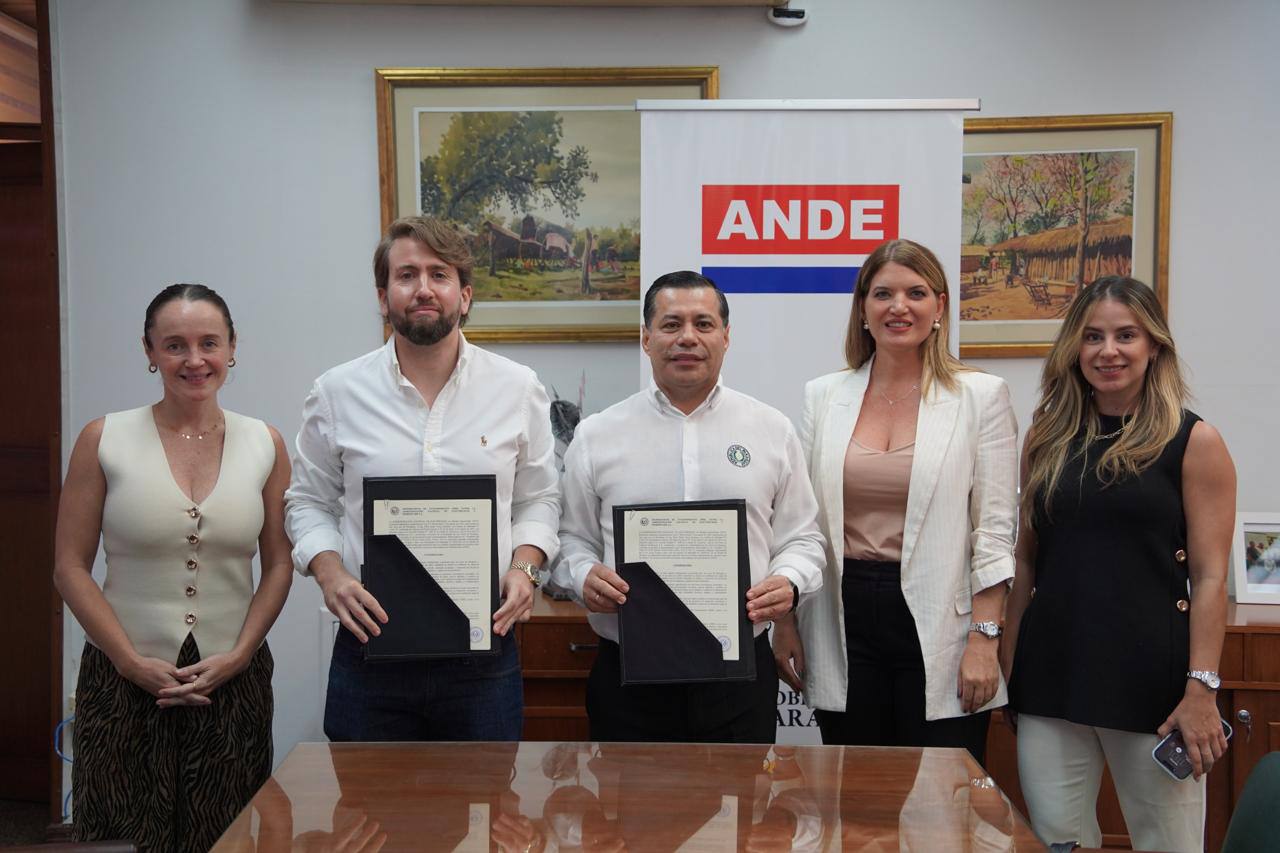
Paraguay Exploring Using Seized Miners for State-Run Bitcoin Operation
Paraguay’s state-owned electricity monopoly, Administración Nacional de Electricidad (ANDE), has signed a Memorandum of Understanding (MOU) with Morphware, setting the stage for a government-led Bitcoin mining program built around thousands of seized mining machines and unused hydroelectric power.
The agreement formalizes cooperation between ANDE and Morphware, positioning Morphware as a technical and advisory partner for regulated Bitcoin mining operations in Paraguay.
At the center of the deal is a growing stockpile of confiscated bitcoin miners that Paraguayan authorities have seized from illegal operations across the country.
According to Morphware founder and CEO Kenso Trabing, the government is holding “roughly 30,000” Bitcoin miners that were taken from operators accused of stealing electricity or falsely registering as other types of businesses to secure lower power rates.
“They’re literally stacked to the ceiling,” Trabing told Bitcoin Magazine, describing government warehouses filled with idle machines.
The pilot program will redeploy 1,500 of the seized Bitcoin miners at ANDE-controlled sites.
Paraguay has become a destination for Bitcoin miners in recent years due to its abundance of low-cost hydroelectric power, much of it generated by the Itaipu Dam and exported to Brazil.
But the rapid inflow of miners has also led to widespread electricity abuse, with many operators tapping the grid illegally or misclassifying their activities to avoid industrial tariffs.
Those practices prompted enforcement actions that resulted in large-scale seizures. While the government successfully removed these miners from the grid, it was left with tens of thousands of machines and no clear plan to use them.
Morphware’s proposal, now reflected in the MOU, is to redeploy those seized miners at utility-controlled sites near substations. Under the arrangement, ANDE would retain ownership and oversight, while Morphware would provide training, operational guidance, and technical expertise.
“They have no experience mining Bitcoin,” Trabing said. “Our role is an advisory role.”
The company plans to help ANDE convert existing utility buildings into basic mining facilities. Many of these structures already sit next to substations and can be retrofitted by removing walls, installing ventilation, and adding transformers, distribution units, and metering equipment. The goal is to turn stranded or underused electricity into a new source of revenue for the state utility.
Electricity in Paraguay is highly political, with different tariff regimes for households, favored industries, and mature sectors. BTC mining falls into a higher-rate category, but illegal operators often attempt to bypass those costs.
By running mining operations directly through ANDE-controlled infrastructure, the government can enforce compliance while capturing the upside itself.
“This is about regulated, utility-controlled sites,” Trabing said. “Not people hiding in the countryside.”
JUST IN:
Paraguay’s National Electricity Administration signs memorandum to “explore the role of Bitcoin mining as a national level opportunity.”
They will use Bitcoin miners to transform unused electricity into “a new revenue engine for Paraguay.”
pic.twitter.com/LwEWmUrJW5
— Bitcoin Magazine (@BitcoinMagazine) March 3, 2026
A key question under discussion is how Paraguay will handle the Bitcoin it produces. Trabing said there are active debates within government agencies. Some officials support selling Bitcoin immediately to fund public programs such as social security, education, and infrastructure.
Others have raised the idea of holding some Bitcoin or managing price risk through financial markets.
Morphware has advised a conservative approach centered on derivatives. Trabing said the company has discussed selling BTC futures on U.S. exchanges as a way to hedge production and stabilize revenue.
The company has also warned against allowing government agencies to custody Bitcoin directly. Paraguay has suffered major cybersecurity breaches in recent years, including a ransomware incident that compromised systems across multiple ministries.
While the agreement focuses on Bitcoin mining, it also reflects a broader shift in how Paraguay views its electricity exports. The country consumes only a fraction of the power it generates and sells the rest abroad at relatively low rates.
Mining offers a way to monetize excess energy domestically without waiting for traditional industrial demand to appear.
“When you do the math, it’s so simple,” Trabing said. “You’re selling electricity for a fraction of what it can earn if you use it locally.”
The MOU marks the first formal step in that direction. Trabing said the initial phase will focus on deploying seized miners and training ANDE staff on mining operations, grid integration, and basic Bitcoin concepts.
Over time, he believes the model could expand. If the pilot proves successful, Paraguay could finance new mining equipment using structured financial products tied to future Bitcoin production, rather than relying solely on seized hardware.
“This is what the future of midstream electricity looks like,” Trabing said. “Grids that don’t just deliver power, but own a stake in the digital infrastructure they enable.”
This post Paraguay Exploring Using Seized Miners for State-Run Bitcoin Operation first appeared on Bitcoin Magazine and is written by Micah Zimmerman.
—
Blog powered by G6
Disclaimer! A guest author has made this post. G6 has not checked the post. its content and attachments and under no circumstances will G6 be held responsible or liable in any way for any claims, damages, losses, expenses, costs or liabilities whatsoever (including, without limitation, any direct or indirect damages for loss of profits, business interruption or loss of information) resulting or arising directly or indirectly from your use of or inability to use this website or any websites linked to it, or from your reliance on the information and material on this website, even if the G6 has been advised of the possibility of such damages in advance.
For any inquiries, please contact [email protected]