“Big Short” investor Steve Eisman said he’s not making any changes from the Iran attack.
Wars and other geopolitical crises generally have a limited impact on the stock market.
Some individual stocks are likely to be beneficiaries.
The war in Iran has thrown investors another curveball.
At a time when market-watchers are already fretting over AI pressure on the software sector and a weakening labor market, a war breaking out in the Middle East is now upending markets.
Will AI create the world’s first trillionaire? Our team just released a report on the one little-known company, called an “Indispensable Monopoly” providing the critical technology Nvidia and Intel both need. Continue »
Stocks have been volatile in each of the three sessions since the U.S. and Israel attacked Iran, with the S&P 500 (SNPINDEX: ^GSPC) tumbling on Tuesday before recouping much of those losses on Wednesday.
Oil prices have soared, and defense stocks have gained as well. However, at least one prominent investor believes the best move right now is to do nothing.
Steve Eisman, who gained fame as one of the investors in “The Big Short,” said in an interview on CNBC that investors should ignore the war, and he thought it would be a positive over the long term.
Eisman, who cashed in big in the financial crisis, has some wisdom when it comes to zigging when others are zagging, so it may be worth heeding his advice.
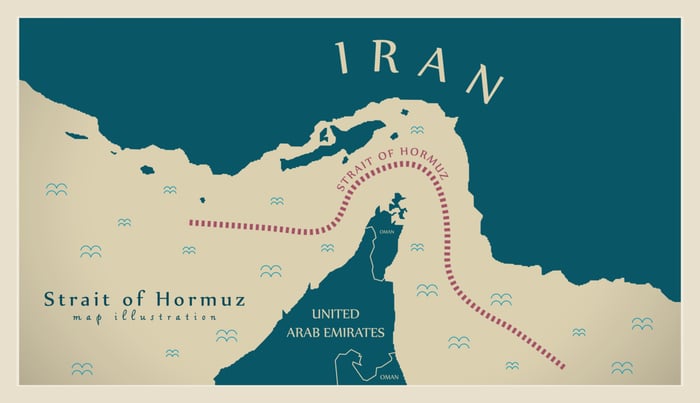
Image source: Getty Images.
Investors have a tendency to react to short-term news, but investing is a long-term game, and the war in Iran seems especially unpredictable. It could spread into a regional conflict, or it could be over in a matter of weeks.
Eisman seems to be advising investors to sit on their hands, in part because he thinks it could be over soon, saying, “People react because of what’s happening. Oil prices are obviously up, but if it goes well, two months from now, prices will be back to where they were.”
Geopolitical turmoil isn’t new, of course, and stocks have continued to rise in spite of wars, famines, the pandemic, and other crises. What will determine how the war impacts the stock market will be its impact on the global economy, which is more likely to show up in specific sectors rather than spark a global recession.
Overall, I think making one or two investments based on the latest news in Iran is reasonable. For example, the Trump administration seems to be adopting a more aggressive foreign policy, especially after the arrest of Venezuelan President Nicolas Maduro. Investing in a defense ETF like the iShares U.S. Aerospace & Defense ETF (NYSEMKT: ITA) is a good way to get exposure to increased defense spending, and there are some intriguing individual stocks out there, including leading Israeli drone maker Elbit Systems (NASDAQ: ESLT).
In general, Eisman is correct. It’s easy to overreact to the latest news, and investors shouldn’t assume they know what’s happening next in Iran. Suddenly changing your game plan on the news isn’t a good move.
Before you buy stock in iShares Trust – iShares U.s. Aerospace & Defense ETF, consider this:
The Motley Fool Stock Advisor analyst team just identified what they believe are the 10 best stocks for investors to buy now… and iShares Trust – iShares U.s. Aerospace & Defense ETF wasn’t one of them. The 10 stocks that made the cut could produce monster returns in the coming years.
Consider when Netflix made this list on December 17, 2004… if you invested $1,000 at the time of our recommendation, you’d have $526,889!* Or when Nvidia made this list on April 15, 2005… if you invested $1,000 at the time of our recommendation, you’d have $1,103,743!*
Now, it’s worth noting Stock Advisor’s total average return is 947% — a market-crushing outperformance compared to 192% for the S&P 500. Don’t miss the latest top 10 list, available with Stock Advisor, and join an investing community built by individual investors for individual investors.
*Stock Advisor returns as of March 4, 2026.
Jeremy Bowman has no position in any of the stocks mentioned. The Motley Fool has no position in any of the stocks mentioned. The Motley Fool has a disclosure policy.
—
Blog powered by G6
Disclaimer! A guest author has made this post. G6 has not checked the post. its content and attachments and under no circumstances will G6 be held responsible or liable in any way for any claims, damages, losses, expenses, costs or liabilities whatsoever (including, without limitation, any direct or indirect damages for loss of profits, business interruption or loss of information) resulting or arising directly or indirectly from your use of or inability to use this website or any websites linked to it, or from your reliance on the information and material on this website, even if the G6 has been advised of the possibility of such damages in advance.
For any inquiries, please contact [email protected]