Today's

top partner

for CFD

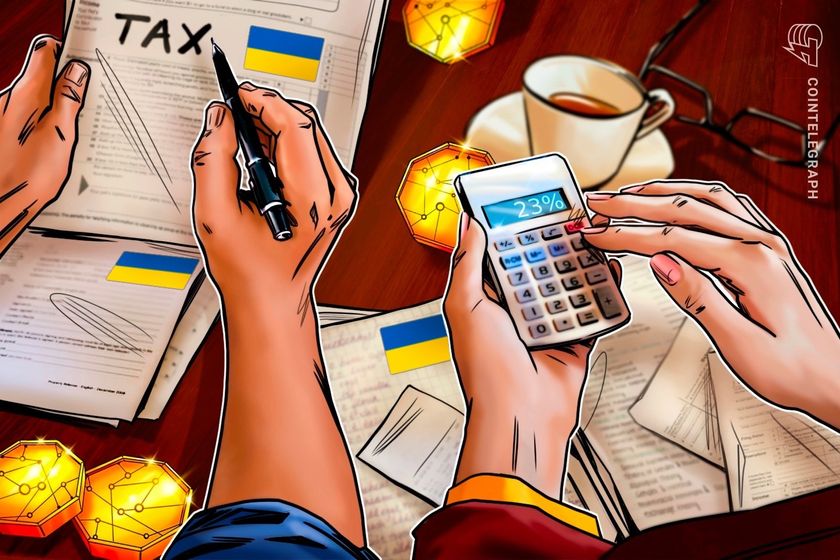
Ukraine’s financial regulator has proposed taxing certain crypto transactions as personal income at a rate of up to 23% but excluding crypto-to-crypto transactions and stablecoins.  Crypto transactions would be taxed at 18% with a 5% military levy on top as part of the proposed framework, released on April 8 by Ukraine’s National Securities and Stock Market Commission. NSSMC Chairman Ruslan Magomedov said in an April 8 statement that “the issue of crypto taxes is not a hypothesis, but a reality that is fast approaching.” He added that the agency created the framework to help lawmakers make an “informed resolution” by considering each suggestion’s advantages and disadvantages because “these aspects can have a critical impact on the market and tax liability.”Under the NSSMC’s proposed crypto framework, a tax will be applied when crypto is cashed out for fiat currency or exchanged for goods or services. Crypto-to-crypto transactions wouldn’t be taxed, bringing Ukraine in line with other European countries, including Austria and France, as well as crypto-friendly jurisdictions like Singapore, the NSSMC said. The regulator says it “makes sense” to exclude stablecoins backed by foreign currencies or only apply a 5% or 9% tax because Ukraine’s tax code already excludes income from transactions in “foreign exchange values.” A translated excerpt of the NSSMC’s report said stablecoins backed by foreign currencies could be exempt from taxation. Source: NSSMCMining, staking, hard forks and airdrops Other crypto-related activities, such as mining, staking and airdrops, are also addressed in the framework which floated a few options for taxation. The NSSMC said crypto mining is generally considered a business activity, but there might be a general tax-free limit for certain crypto transactions, including mining. Under the framework, staking could be considered as “business captive income” or only taxed if the crypto is cashed out for fiat currencies. While hard forks and airdrops could be taxed either as ordinary income or when the tokens are cashed. Related: Ukraine officials get training on crypto and virtual assets investigationThe regulator suggests a tax-free threshold could help “relieve the burden on small investors” and is common in other jurisdictions. Exemptions for donations, transfers between family members, and holders who keep their crypto for a set amount of time are also flagged as possibilities. However, the NSSMC says the exemption might not apply to non-custodial crypto wallets. Last December, Daniil Getmantsev, head of the tax committee of Ukraine’s parliament, said a draft bill to legalize cryptocurrencies was under review and expected to be finalized early this year. Ukrainian President Volodymyr Zelenskyy first signed a law establishing a legal framework for the country to operate a regulated crypto market in March 2022. Magazine: New ‘MemeStrategy’ Bitcoin firm by 9GAG, jailed CEO’s $3.5M bonus: Asia Express

Ukraine floats 23% tax on some crypto income, exemptions for stablecoins

Ukraine’s financial regulator has proposed taxing certain crypto transactions as personal income at a rate of up to 23% but excluding crypto-to-crypto transactions and stablecoins.  

Crypto transactions would be taxed at 18% with a 5% military levy on top as part of the proposed framework, released on April 8 by Ukraine’s National Securities and Stock Market Commission. 

NSSMC Chairman Ruslan Magomedov said in an April 8 statement that “the issue of crypto taxes is not a hypothesis, but a reality that is fast approaching.” 

He added that the agency created the framework to help lawmakers make an “informed resolution” by considering each suggestion’s advantages and disadvantages because “these aspects can have a critical impact on the market and tax liability.”

Under the NSSMC’s proposed crypto framework, a tax will be applied when crypto is cashed out for fiat currency or exchanged for goods or services. 

Crypto-to-crypto transactions wouldn’t be taxed, bringing Ukraine in line with other European countries, including Austria and France, as well as crypto-friendly jurisdictions like Singapore, the NSSMC said. 

The regulator says it “makes sense” to exclude stablecoins backed by foreign currencies or only apply a 5% or 9% tax because Ukraine’s tax code already excludes income from transactions in “foreign exchange values.” 

Ukraine floats 23% tax on some crypto income, exemptions for stablecoins

A translated excerpt of the NSSMC’s report said stablecoins backed by foreign currencies could be exempt from taxation. Source: NSSMC

Mining, staking, hard forks and airdrops 

Other crypto-related activities, such as mining, staking and airdrops, are also addressed in the framework which floated a few options for taxation. 

The NSSMC said crypto mining is generally considered a business activity, but there might be a general tax-free limit for certain crypto transactions, including mining. 

Under the framework, staking could be considered as “business captive income” or only taxed if the crypto is cashed out for fiat currencies. While hard forks and airdrops could be taxed either as ordinary income or when the tokens are cashed. 

Related: Ukraine officials get training on crypto and virtual assets investigation

The regulator suggests a tax-free threshold could help “relieve the burden on small investors” and is common in other jurisdictions. 

Exemptions for donations, transfers between family members, and holders who keep their crypto for a set amount of time are also flagged as possibilities. However, the NSSMC says the exemption might not apply to non-custodial crypto wallets

Last December, Daniil Getmantsev, head of the tax committee of Ukraine’s parliament, said a draft bill to legalize cryptocurrencies was under review and expected to be finalized early this year. 

Ukrainian President Volodymyr Zelenskyy first signed a law establishing a legal framework for the country to operate a regulated crypto market in March 2022. 

Magazine: New ‘MemeStrategy’ Bitcoin firm by 9GAG, jailed CEO’s $3.5M bonus: Asia Express

Read the full story: Read More“>

Blog powered by G6

Disclaimer! A guest author has made this post. G6 has not checked the post. its content and attachments and under no circumstances will G6 be held responsible or liable in any way for any claims, damages, losses, expenses, costs or liabilities whatsoever (including, without limitation, any direct or indirect damages for loss of profits, business interruption or loss of information) resulting or arising directly or indirectly from your use of or inability to use this website or any websites linked to it, or from your reliance on the information and material on this website, even if the G6 has been advised of the possibility of such damages in advance.

For any inquiries, please contact [email protected]
G6 is free to use portal to find ways to improve your life. We choose carefully posts and partner with the best in field writers to bring you the best content. Since 2006, we are there for you on your way to success.

Find on Facebook Follow on Instagram Connect on LinkedIn

Don't miss out on latest news

Join newsletter

Enable notifications

You got a story to share? Questions?

Just connect our team and let's see

©2006-2023 - All rights reserved - GSIX.ORG

CFDs are complex instruments and come with a high risk of losing money rapidly due to leverage. Between 74-89% of retail investor accounts lose money when trading CFDs. You should consider whether you can afford to take the high risk of losing your money

All Content on this site is information of a general nature and does not address the circumstances of any particular individual or entity. Nothing in the Site constitutes professional and/or financial advice, nor does any information on the Site constitute a comprehensive or complete statement of the matters discussed or the law relating thereto. You alone assume the sole responsibility of evaluating the merits and risks associated with the use of any information or other Content on the Site before making any decisions based on such information or other Content. In exchange for using the Site, you agree not to hold G6, Lecira, its affiliates or any third party service provider liable for any possible claim for damages arising from any decision you make based on information or other Content made available to you through the Site.